Skip to content

Welcome to Lost Valley Wines, we are glad you're here! Visit Soon

Our Vineyards

With elevations of 500’ to over 800’, the land is perfectly suited to grapes like Cabernet Sauvignon, Petit Verdot to Sauvignon Blanc, vines that thrive in the Napa Valley climate. For over 15 years, the Lamb Family has worked to build the vineyard and its surrounding land into the property it is today.

The sustainable efforts put into practice by Deb and Eric are evident throughout this beautiful vineyard. From the ground up you see that the soil is healthy, rich, and teaming with life. The vines are thriving in this environment and the ecosystems around are balanced and in sync with farming operations. It is a beautiful partnership of intentional farmers, happy animals, and incredible people. These benefits are realized in their outstanding wine.
Cori Carlson
Owner, Napa Pasture Protein

The ranch is a Certified California Sustainable Vineyard. Cordero Vineyards has achieved the California Sustainable Winegrowers Alliance certification for the last 3 years. Our sustainable efforts were highlighted in CCS Quarterly Action Plan Spotlight

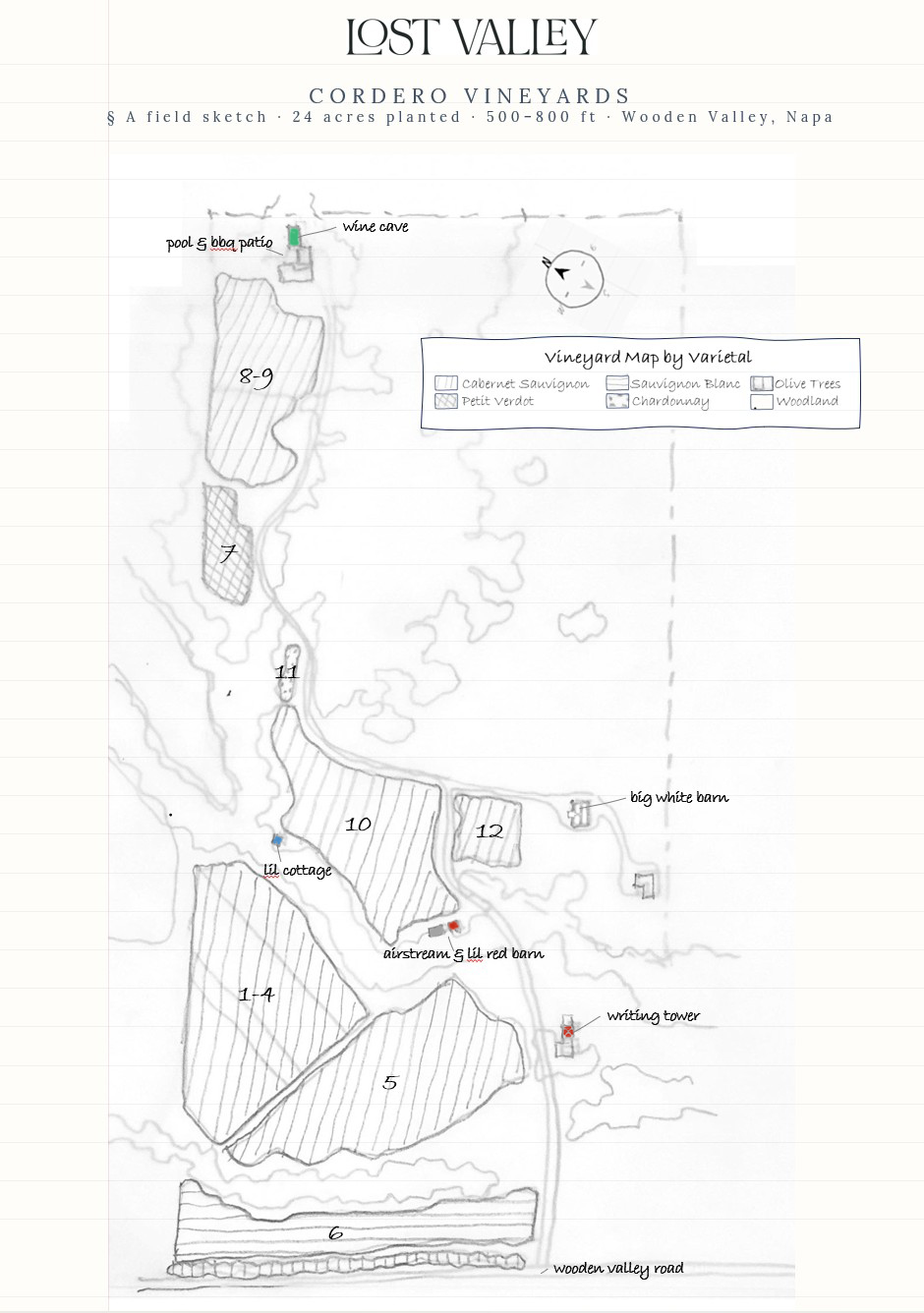
Vineyard Map by Varietal

GRAPE VARIETIES

Cabernet Sauvignon

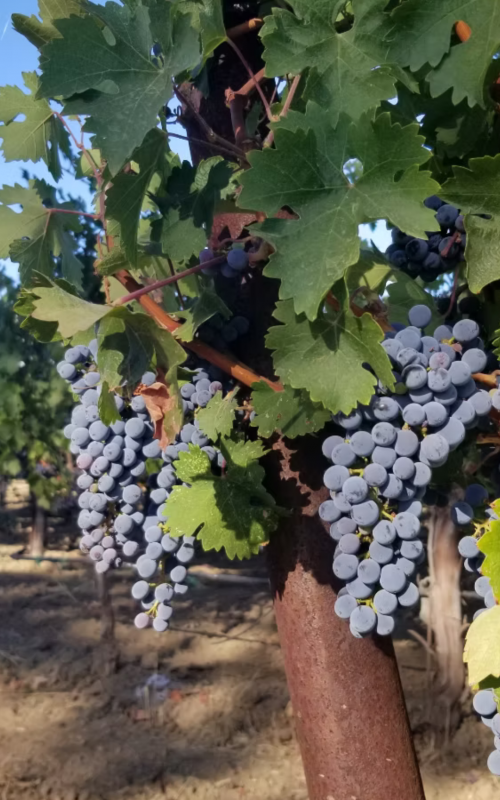
This is the predominant varietal at Lost Valley.  There are several clones including 07, 337, 169 and 04. These vines produce high quality grapes used in one of  the most popular, opulent wines in Napa.

Sauvignon Blanc

The Lamb Family has 3 acres planted with the Muscat clone of Sauvignon Blanc, one of the oldest domesticated grape varieties.  It is used in the top White Bordeaux (Sauternes) and great Loire Valley wines (Sancerre).

Chardonnay

This is a boutique vineyard of just 110 vines of Clone 04 Chardonnay near the lower portion of the vineyard to test these vines in the Wooden Valley microclimate.

Petit Verdot

Lost Valley has a little over 1500 vines of Petit Verdot in our hillside vineyard. This varietal has seen increasingly popularity in climates such as Wooden Valley.  Although the grape was historically known as a blending grape for fine Bordeaux wines, it can make intensely bold, fruity yet floral red wines on their own.

Untitled (1080 x 1920 px)
SUSTAINABILITY EFFORTS

Soil Management

Soil management includes planting covercrops to improve soil nutrients, applying compost from Recology that also increase soil nutrients and promote microbial activity, and periodic soil tests and analysis.

Pest Management

Natural pest management strategies to control rodents and insects include encouraging predators with owl and bluebird boxes. No pesticides are used on property.

Weed Management

Mechanical weed control is used in place of herbicides. This includes in-row discing and hand shoveling. Covercrops and compost also contribute to the reduction of weeds.

Rotational Grazing

Sheep are brought on each spring from Napa Pasture Protein to "mow" the grass in the vineyards before bud break, add carbon into the soil and keep surrounding hillsides free of tall grass. Cattle from the Lauritsen Ranch are also brought on property from Spring - Fall to further mitigate wild fire risk.

Purchase Wine

Check our our latest vintages available for purchase.