
Welcome to Lost Valley Wines, we are glad you're here! Visit Soon
Lost Valley is a Certified California Sustainable Vineyard (CSWA) and a Verified Napa Valley Micro-Producer. Farming practices are organic, with no pesticides or herbicides used, and a focus on measurable environmental improvement.



From the ground up, Lost Valley is a working model of regenerative farming in Napa Valley—built on healthy soils, balanced ecosystems, and a commitment to continuous, measurable improvement. The vineyard is farmed organically, without pesticides or herbicides, and has been Certified California Sustainable (CSWA) since 2022.
For more than 15 years, Piña Vineyard Management has stewarded Lost Valley with a consistent, sustainability-driven approach. Their work integrates precise irrigation and nutrient management, along with integrated pest management that emphasizes monitoring, beneficial insects, and habitat strategies such as owl boxes to naturally control pests.
Soil health is strengthened through cover crops, compost, rotational grazing and minimal tillage, while disease is managed using clean plant material and organic inputs like sulfur. Erosion control practices—including mulching, cover cropping, and low-impact equipment—help preserve soil structure and ensure the long-term resilience of the vineyard.

Building healthy vineyard soils through composting and organic matter. Compost diverts waste from landfills, returns nutrients to the earth, improves soil structure, and increases water retention while reducing the need for synthetic inputs. Every fall post harvest, compost from Recology’s food waste program is spread across the vineyards. This is combined with no-till cover crops in all vineyards.
Compost plays a critical role by recycling nutrients back into the soil, creating a natural fertility cycle that reduces reliance on external inputs. As organic matter increases, soil structure improves—allowing roots to grow deeper and access nutrients more efficiently. Better structure also enhances water retention, helping vines withstand dry conditions, while no-till cover crops protect soil biology, prevent erosion, reduce surface temperature, and support beneficial microbial life that keeps the vineyard in balance.

Using automatic irrigation and monitoring technologies to conserve water while maintaining optimal vine stress. Strategies include precise soil moisture tracking and deficit irrigation to optimize vineyard water use. Automated irrigation with WiseConn and Drop Point Automation’s system also supports Distribution Uniformity Tests and reduces field trips to the vineyard with remote monitoring and controls.
These technologies allow for a highly precise, data-driven approach to water management. By continuously monitoring soil moisture and vine needs, irrigation can be applied only when and where it’s necessary, preventing both overwatering and water stress. Deficit irrigation further refines this balance by intentionally limiting water at key stages to promote vine health and fruit quality. Remote monitoring and uniformity testing ensure that water is distributed evenly across the vineyard, improving efficiency while reducing labor, energy use, and unnecessary water consumption.

Transitioning vineyard operations to renewable energy through solar power and electrified equipment, reducing carbon emissions and lowering long-term energy costs. At Lost Valley, photovoltaic panels with battery storage power ag structures, pumps, EV equipment and weather stations. A Monarch EV tractor is used for mowing, harvesting, and compost spreading.
This shift to electrification reduces reliance on fossil fuels while creating a more efficient and resilient energy system on the vineyard. Solar generation paired with battery storage allows energy to be used where and when it’s needed, even during peak demand or outages. Electrified equipment like the Monarch tractor not only lowers emissions but also reduces noise, maintenance, and fuel costs—demonstrating how clean energy can support both environmental goals and day-to-day vineyard operations.

Mechanical weed control replaces herbicides entirely: in-row mowing, weed trimming, and cover cropping all contribute to weed suppression. The result is a cleaner vineyard floor without chemical inputs. Rotational grazing is also done with sheep and cattle, adding carbon to the soil and keeping hillsides clear of tall grass for wildfire mitigation.
These practices work together to manage weeds while improving overall vineyard health. Mechanical methods control growth without disturbing soil biology, while cover crops naturally outcompete weeds and protect the soil surface. Grazing animals contribute organic matter and nutrients, enhancing soil fertility, while also reducing fuel loads—helping lower wildfire risk and creating a more balanced, self-sustaining vineyard ecosystem.
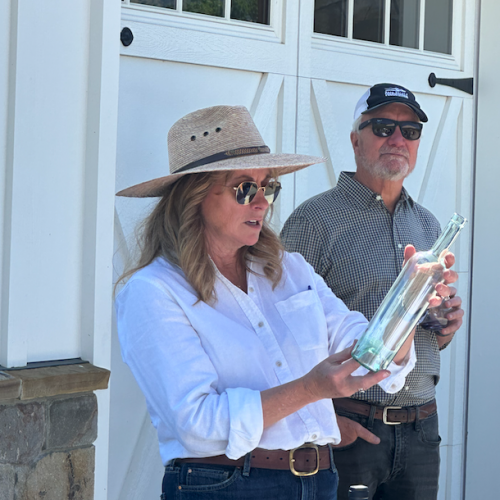
Reducing the environmental impact of wine packaging through lighter bottles, recycled glass, and alternative formats that balance sustainability with quality presentation. At Lost Valley, lightweight Eco bottles, FSC/PEFC labels, and no foils reduce waste and the carbon footprint of every release.
Packaging plays a significant role in a wine’s overall environmental impact, particularly in production and transportation. Lighter bottles require less energy to produce and ship, while recycled materials reduce demand for new resources. Thoughtful choices like certified paper labels and removing unnecessary elements such as foils streamline packaging and reduce waste without compromising quality, demonstrating how small changes can meaningfully reduce environmental impact at scale.

Supporting a growing movement that connects consumers directly with small-scale wineries and farms. Lost Valley Wines is a founding participant in the Micro-Winery Guild and a verified Napa Valley Micro-Producer, preserving the small family farm heritage on which Napa Valley was built.
This model strengthens the connection between vineyard and consumer, emphasizing transparency, craftsmanship, and a sense of place. By supporting small-scale production, it helps preserve Napa Valley’s agricultural roots while allowing producers to focus on quality over scale.
With AB 720, these poducerrs can now host vineyard tasting events. The result is a more personal wine experience—where each bottle reflects not just the land, but the people and practices behind it.
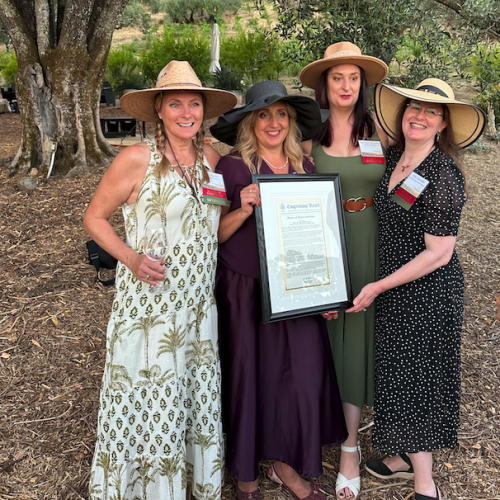
Championing partnerships with women-owned businesses, producers, and organizations to promote diversity, equity, and leadership within agriculture and the wine industry. Lost Valley is woman-owned and operated by Debra Becker Lamb, a UC Davis-certified winemaker whose background in sustainable architecture shapes every decision on the ranch. The winery actively partners with and uplifts women-led organizations across Napa Valley and is on the board of Women for Wine Sense Napa/Sonoma Chapter.
These efforts help foster a more inclusive and forward-thinking wine community. This commitment extends beyond the vineyard, shaping a culture that values representation, mentorship, and long-term impact. Some of the women-owned businesses Lost Valley partners with include Gatherings – Antiques by Colette Abernethy and Milosc Designs by Jodi Jusiak.
Together, these initiatives reflect a broader philosophy: that sustainability is not only environmental, but also social. By investing in people and partnerships, Lost Valley helps ensure the future of the wine industry is as resilient, inclusive, and dynamic as the land it depends on.
We’d love to keep you up to date on happenings at the ranch. Please sign up!
Sustainability at Lost Valley is not a single practice—it’s a fully integrated system that shapes all aspects of making wine, from soil to bottle. It shows up in how soils are built through compost and cover crops, how water is precisely managed with data-driven irrigation, how pests are controlled through integrated pest management and natural habitat, and how energy use, packaging, and farming inputs are continually reduced.
This approach is designed to evolve. Practices like solar power, electrification, precision irrigation, and regenerative soil management are adopted where they create real environmental and operational value, allowing for steady, meaningful progress over time. The result is not just sustainability or regenerative farming as a concept, but a working model that supports both the land and the wines it produces—ensuring that every bottle reflects its place, shaped by responsible practice and long-term care.
Ivan comes to us from a country with over 2,500 years of wine production. He brings this history and his experience to bear as a consulting winemaker for Lost Valley Ranch Wines. He earned his enological degree from Crimean Agrotech University. He earned his chops working at all scales of vineyards and wineries across Ukraine, Switzerland, Germany, Moldova, Italy, and now Napa Valley.
Ivan guides the harvest, production, and bottling of all LVR Wines. Coupled with his love of wine and keen sensory abilities, his penchant for engineering and mechanics continually improve the process and quality of our wines.
The native Ukrainian found his way to Napa in the fall of 2022 thanks to the Napa Valley to Ukraine organization. When not found making, bottling, or consuming wine, he can be found geeking out on wine equipment and enjoying music.
Debra and her partner Eric live at the Lost Valley Ranch farm and vineyard, Cordero Vineyards. She is Owner of Lost Valley Ranch Wines, established in 2023. She earned her Winemaking Certificate from UC Davis and works as overall vintner and manager of LVR Wines.
She comes from a long career in sustainable architecture and has applied that experience and passion to agriculture and wine making. The ranch is certified sustainable through CSWA and a verified Micro-Winery through Save the Family Farms.
When she is not making or managing the wine, she can be found outside at the ranch in her element, picking wildflowers, petting fluffy friends or wrangling mowing equipment.